Behind the scenes

Production Notes

An ongoing journal from the making of The Rise of Darna — the ideas, experiments, and lessons as the project moves forward. Newest notes first.

July 5, 2026

Production Notes #4

One of the biggest challenges of using AI tools for 3D model sculpting is maintaining consistency. To achieve reliable results, prompts need to be extremely clear and detailed. Even a small change in wording can affect the final output, resulting in differences in color, lighting, texture, proportions, or overall design from one generation to the next.

There's a common misconception that AI makes it easy to create a short film with just a few clicks. In reality, the process is far more involved. Most of the time, the first image generation is only a starting point. Rarely does it produce the exact visual style you're looking for right away. Instead, the work becomes an ongoing cycle of experimentation, evaluation, and refinement.
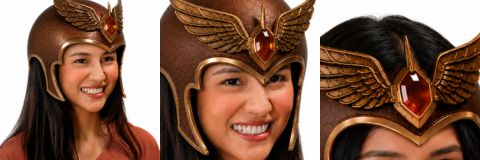
AI-generated variations of Bronze Valkyrie's helmet showing inconsistent results

A significant portion of the production process is spent rewriting prompts, adjusting design elements, generating new variations, and comparing results against the creative vision. The goal isn't simply to create an image that looks good. The goal is to create images that remain visually consistent across an entire project, especially when multiple scenes, camera angles, and character appearances need to match one another.

The helmet design for Bronze Valkyrie is a perfect example of this challenge. What appears to be a relatively simple piece of armor required more than twenty revisions before I arrived at a design that truly matched what I had envisioned. Each version introduced new ideas, but also new problems to solve. Some designs had the right shape but the wrong materials. Others captured the overall silhouette but missed important details in the ornamentation or proportions.
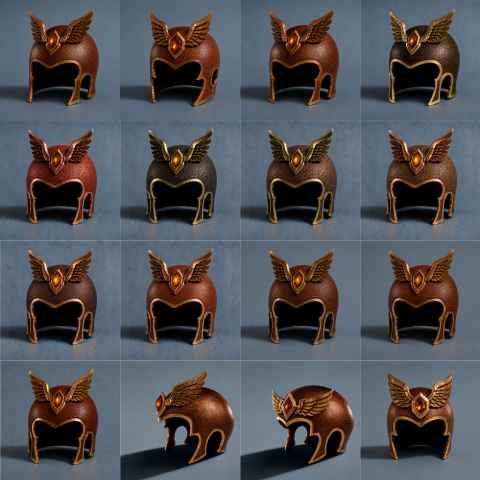
Grid of Bronze Valkyrie helmet design revisions

While the revision process can be time-consuming, it's also one of the most rewarding parts of the workflow. Every iteration brings the design closer to its final form. In many ways, creating with AI feels less like pressing a button and more like collaborating with a highly talented but unpredictable artist—one that requires patience, precision, and a great deal of creative direction to achieve the desired result.
July 3, 2026

Production Notes #3

As the project has evolved, the overall direction of the series has become much more defined. The story will follow three central heroines: Midnight Blue Valkyrie, Bronze Valkyrie, and Hunter Green Valkyrie. Although they exist within the same universe, my goal is for each character to have her own distinct visual identity, personality, fighting style, and transformation sequence. I want audiences to recognize each Valkyrie the moment she appears on screen.

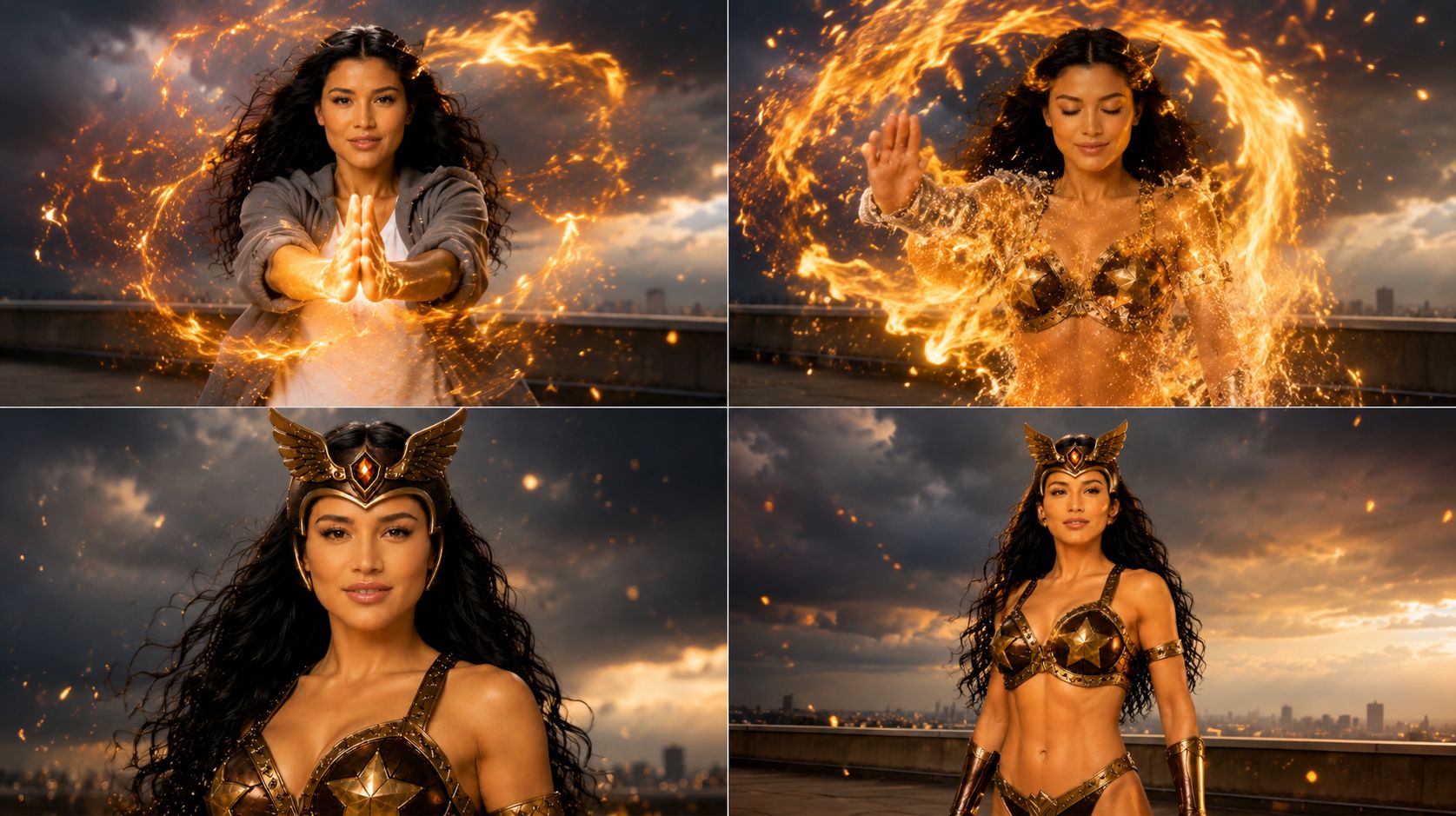
One of the biggest creative challenges has been designing the transformation scenes. For many fans, a superhero's transformation is just as memorable as the action itself. It's the moment that reveals the character's true power, so I wanted every sequence to feel like a major cinematic event instead of a simple visual effect. The transformation needed to build anticipation, convey emotion, and end with a dramatic reveal worthy of the character.

Over the past several days, I've been experimenting with different AI workflows and refining countless prompts to achieve that effect. Every detail matters, including the camera movement, the rhythm of the animation, the lighting, the flow of the energy effects, and even the way the costume materializes around the character. Small prompt adjustments can produce dramatically different results, so much of the process has been a cycle of testing, reviewing, and refining until each scene feels polished.

Concept art of Bronze Valkyrie's transformation sequence

At the moment, Bronze Valkyrie's transformation is the one I'm most satisfied with. Even so, it's still not considered final. The character herself is continuing to evolve, and even her current name is only a working title. That's one of the reasons I enjoy creating these teasers. They give me the freedom to explore new ideas, gather feedback, and refine the creative direction before committing to the final version of the series.

For Bronze Valkyrie's appearance, I took inspiration from actress Sanya Lopez, who has long been one of the most popular fan choices to portray Darna. Many fans have imagined her in the role over the years, so giving Bronze Valkyrie a subtle resemblance to her felt like a fun tribute to that enthusiasm. It's a small piece of fan service, but the character is still being developed as an original heroine with her own story, personality, and place within this universe.

July 1, 2026

Production Notes #2

Designing the teaser turned out to be more challenging than I expected, especially when it came to blending the characters seamlessly with their environments. I spent several hours writing and refining prompts, then generating and iterating on images using large language models (LLMs) until I achieved the visual style I was aiming for.

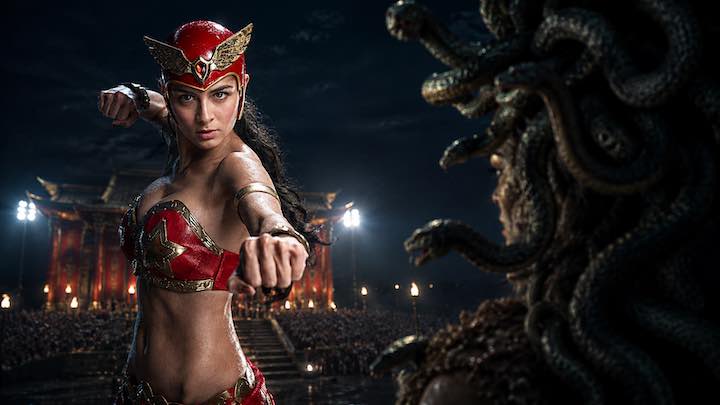
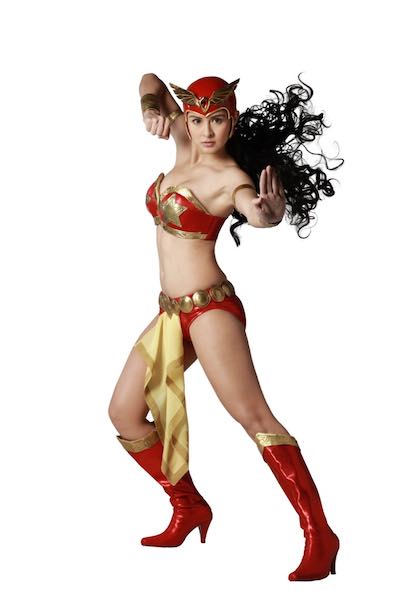
Concept art reimagining Marian Rivera's Darna as a Roman Empire warrior

My first concept reimagined Marian Rivera's Darna as a warrior from the Roman Empire. I wanted to create the feeling of an epic one-on-one battle against Medusa, giving the character a completely different historical and mythological setting while still preserving her heroic presence.

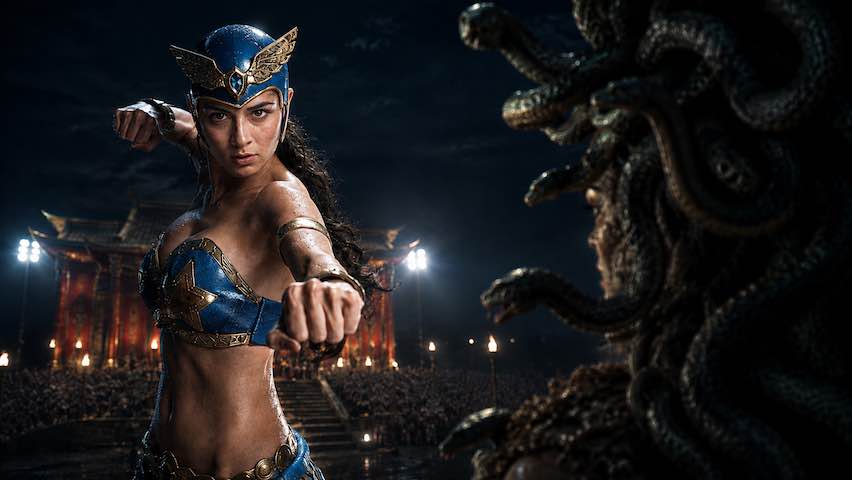
Concept art of Darna facing Medusa in an epic one-on-one battle

After that, I changed the costume from its traditional red to blue. This wasn't just a creative choice—it also made it much easier to use the design as a base for experimenting with different character identities and face replacements during the concept development process.

Concept art of Darna in blue armor, based on Marian Rivera

The story I'm developing centers around three female superheroes, each distinguished by the color of her armor: a brown-armored warrior, a blue-armored warrior, and a green-armored warrior. Each character will eventually have her own unique identity, personality, and role within the story.

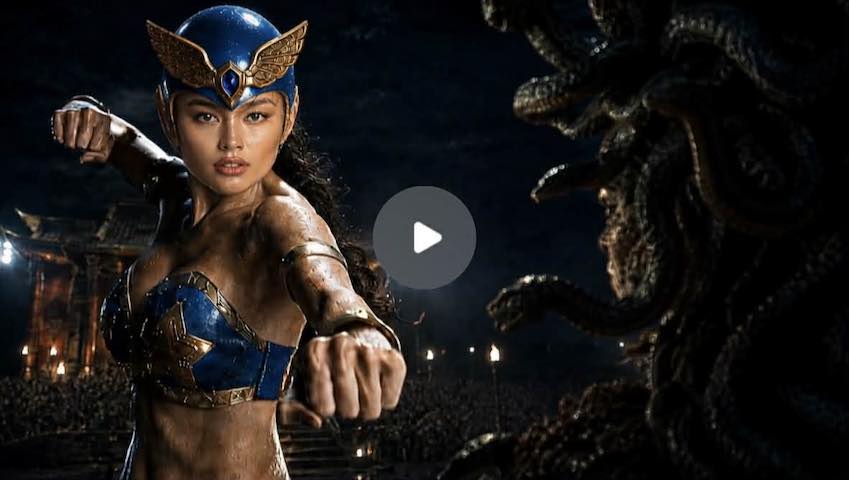
The most difficult part of the entire process was transferring facial identities onto the characters. Current LLMs have become much stricter about generating images that resemble real people, particularly when face replacement techniques resemble deepfakes. Because of these limitations, achieving consistent and accurate character appearances required a great deal of experimentation and prompt refinement.

Concept art of the blue-armored Darna with a different facial identity

For that reason, the characters featured in this teaser should be viewed as early visual concepts rather than their final designs. Their appearances will continue to evolve, and they will likely look different by the time the full series is produced.

June 30, 2026

Production Notes #1

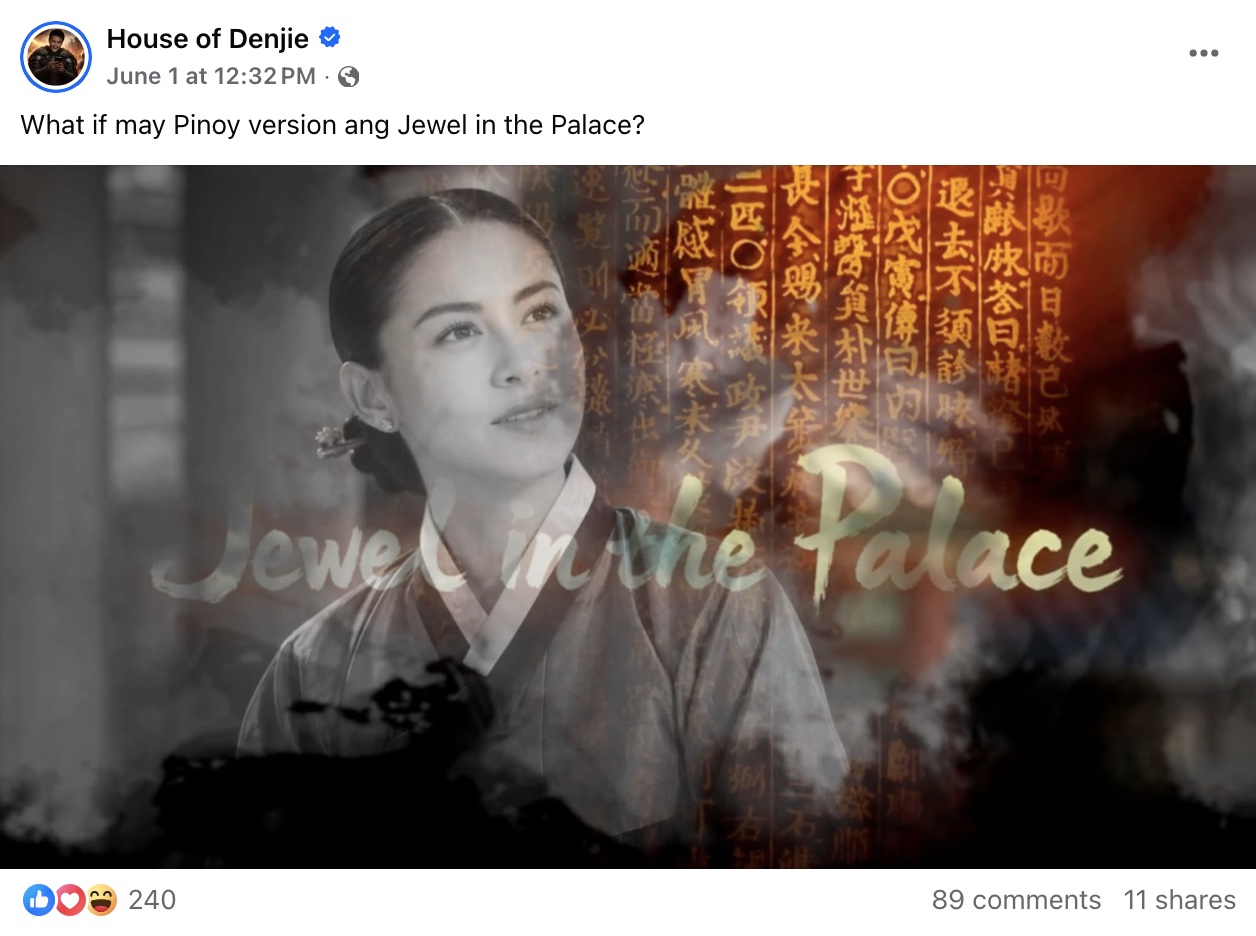
It all started with a simple idea: “Imagine Jewel in the Palace... but make it Pinoy.”

Concept image reimagining Jewel in the Palace with a Filipino setting

The response was incredibly encouraging, and it made me want to keep exploring the concept. At the same time, I noticed that many Filipinos had grown tired of localized adaptations of South Korean dramas.

That sparked a different question: What if, instead of adapting another foreign series, we reimagined Darna for a modern audience? What if we gave her a cinematic treatment using AI?

That idea became the first teaser.

It was also my first time working with AI tools, so every step of the process became a learning experience. There was a lot of trial and error, and I quickly realized just how much there was to learn.

Darna, in particular, has been one of the biggest challenges because of the fast-paced action. Creating convincing action sequences with AI takes a lot of careful prompt writing, and every scene has helped me refine that skill a little more.

Back to The Rise of Darna