

The Google December 2025 core update represents a significant algorithmic shift that has redrawn the search landscape for website owners and digital marketers. Announced on December 11, 2025, at 12:25 PM ET, this update has proven to be one of the most volatile core updates of the year, with cascading effects that continue to reshape search rankings across all industries and languages.
Understanding the December 2025 Core Update
Google officially described this update as “a regular update designed to better surface relevant, satisfying content for searchers from all types of sites.” However, the actual impact reveals something more consequential than a routine algorithmic adjustment. This is the third core update of 2025, following March and June releases, and represents Google's ongoing effort to refine how its core ranking systems evaluate content quality, expertise, and user value.
Unlike targeted updates that focus on specific issues such as spam or review manipulation, the December 2025 core update affects Google's fundamental assessment of what constitutes "satisfying content" across the entire web. The update mechanism involves improvements to different core systems within Google's ranking infrastructure rather than applying penalties. This distinction is crucial: websites did not necessarily do anything "wrong" to lose rankings. Instead, Google has recalibrated its standards for what constitutes high-quality, helpful content in competitive search spaces.
Timeline and Rollout Pattern: The Two-Wave Volatility Surge
Google indicated that the December 2025 core update would take up to three weeks to roll out completely. The update actually completed its rollout in 18 days—faster than initially estimated—finishing on December 29, 2025. However, the rollout pattern revealed an unexpected volatility structure characterized by two distinct major waves of ranking fluctuations.
First Wave: December 11-14, 2025
The initial wave of volatility began immediately following the announcement. Within 24 hours, ranking tracking tools detected significant movement. The most intense impact occurred on December 13, 2025—a Saturday—when SEMrush's volatility sensor spiked to 7.8/10.
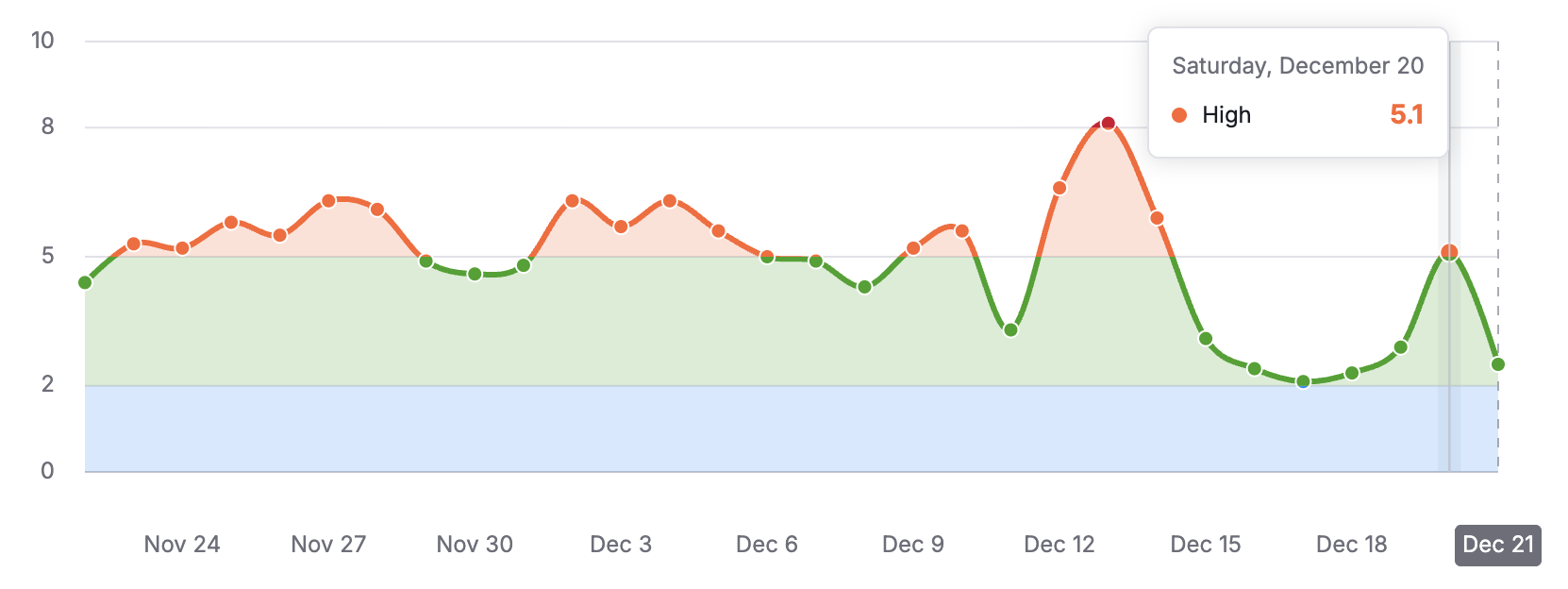
This early surge demonstrated that Google was aggressively processing content assessments for broad quality signals, particularly targeting Health and YMYL (Your Money or Your Life) categories, which experienced among the earliest and most severe ranking shifts.
Deceptive Middle Period: December 14-19, 2025
Following the initial spike, volatility appeared to cool considerably. Tracking tools showed a notable decline in movement, leading many SEO professionals to believe the update had largely stabilized. However, this period was misleading—it was simply the eye of the storm rather than a true resolution of algorithmic adjustments.
Second Wave: December 20, 2025
The most surprising development occurred on December 20, 2025—another Saturday. A second major volatility surge struck with even greater intensity than the initial wave. SEMrush's sensor reached 8.7/10, the highest volatility reading recorded across all of 2025. This second wave disproportionately affected e-commerce sites and affiliate publishers, suggesting Google was applying a second layer of quality refinements targeting different content types or quality signals.
Volatility Tracking: What the Tools Revealed
Understanding the December 2025 core update requires examining the data from multiple tracking platforms, as different tools captured various aspects of the algorithmic changes:
SEMrush Sensor Findings
SEMrush's volatility sensor provided the most comprehensive real-time measurement of ranking fluctuations. The platform tracked volatility across multiple industries and demonstrated that the December 2025 update resulted in measurable fluctuations in search positions. The peak volatility of 8.7/10 represents a significant benchmark—higher than June 2025's 7.9/10 and March 2025's 7.4/10, making this the most volatile core update of the year.
Similarweb SERP Seismometer Insights
Similarweb's tracking tools confirmed elevated volatility levels while providing industry-specific breakdowns. The tool revealed that different verticals experienced different intensity levels of ranking change, with finance and health categories showing the highest fluctuations. The tracking data also showed variations in how top-10 results were reshuffled compared to broader ranking positions.
Search Console Validation
Google Search Console data, shared by industry analyst Barry Schwartz, corroborated the findings of the tracking tool, showing sharp fluctuations in clicks, impressions, and average position changes during the rollout window. This Search Console data confirmed that the volatility was affecting sites on a large scale, rather than representing isolated instances.
Cognitive SEO SIGNALS and Other Tools
Additional tracking platforms, including CognitiveSEO SIGNALS, Mozcast, and Algoroo, all reported elevated volatility metrics during both surge periods. Some tools showed delayed detection of the update compared to others, with variations attributable to different monitoring methodologies and sample sizes.
Impact Across Industries and Content Types
The December 2025 core update did not affect all websites equally. Analysis of affected sites reveals clear patterns in which content types suffered the most significant ranking losses:
Severely Affected Categories:
- Affiliate Sites and Product Reviews: Approximately 71% of affiliate-focused websites reported negative impacts. Sites without demonstrated first-hand product experience, testing methodology, or original product ownership struggled significantly. Conversely, review sites with clear testing protocols and owned product experience saw gains up to 39%.
- E-commerce Platforms: Roughly 52% of e-commerce websites experienced ranking losses. The impact was particularly severe for sites relying on manufacturer descriptions only (down 67%) or basic product filter pages (down 52%). However, e-commerce sites with detailed, firsthand product experiences and original photography saw gains of up to 44%.
- Health and Finance Content: Between 61-67% of YMYL websites experienced ranking volatility. This suggests that Google's enhanced E-E-A-T evaluation systems have become more sophisticated in identifying truly authoritative sources within sensitive content categories.
Moderately Affected Categories:
- Local Service Websites: Local SEO markets, including HVAC, plumbing, legal services, and medical practices, experienced heightened volatility, with Google balancing local authority signals against topical expertise.
- Content Blogs and News Publishers: Content-heavy sites that hadn't refreshed their older content faced challenges, as Google increasingly favored comprehensive and current information.
Winners from the Update:
Sites that benefited from the December 2025 core update typically shared these characteristics:
- High-quality, original content with clear value propositions
- Regular content updates and maintenance schedules
- Clear structural organization and easy readability
- Demonstrated topical authority within specific niches
- Strong E-E-A-T signals (Experience, Expertise, Authoritativeness, Trustworthiness)
- User experience optimization, including fast load times and mobile responsiveness
- Transparent author attribution with professional credentials
The Broader Message: Quality Threshold Elevation
The December 2025 core update marks a significant shift in how Google assesses search content. Rather than introducing entirely new ranking factors, the update has decisively raised the minimum quality threshold required to compete in most search categories. This represents a cumulative effect from changes throughout 2025, particularly the August spam update and the integration of the Helpful Content System into core ranking logic.
Notably, E-E-A-T requirements—previously most visible in YMYL categories—have now expanded across virtually all competitive search spaces, including lifestyle content, product reviews, SaaS platforms, and entertainment categories. This represents a structural shift toward privileging substance, authenticity, and verified expertise over keyword optimization and content volume.
Volatility Patterns and Google's Methodology
The two-wave volatility pattern observed during the December 2025 rollout raises intriguing questions about Google's update methodology. The fact that both major surges occurred on Saturdays (December 13 and 20) suggests Google may intentionally time major algorithmic adjustments for weekends when user behavior patterns differ from weekdays, potentially allowing for cleaner test data. The extended 18-day rollout allowed Google to deploy changes gradually across different geographic regions, device types, and user segments rather than implementing a single instantaneous shift.
Practical Guidance for Website Owners
For sites experiencing ranking fluctuations from the December 2025 core update, Google's core update guidance emphasizes a critical distinction: ranking decreases don't necessarily indicate problems requiring technical fixes. Instead, Google recommends that site owners focus on content quality assessment and strategic improvements that align with evolved user expectations.
Immediate Actions (During and After Rollout):
Website owners should monitor Google Search Console for changes in average position, impressions, and click-through rates. However, making significant site changes during the rollout period can be counterproductive, as algorithm adjustments are ongoing. Patience during the stabilization period is more effective than reactive changes.
Post-Rollout Assessment (After December 29):
Once the rollout completes, conduct competitive analysis examining which pages gained the visibility your site lost. Identify patterns in competitor winners—do they have more original research, better structure, stronger author credentials, or enhanced user experience? These patterns reveal what the updated algorithm prioritizes.
Long-Term Recovery Strategy:
Unlike targeted updates, recovery from core updates often requires more than incremental optimization. Websites should evaluate content comprehensiveness, freshness, and demonstrated expertise. Building topical authority through interconnected content clusters, rather than publishing isolated articles, improves how Google understands your expertise.
Implications for Future Search Landscape
The December 2025 core update establishes clear parameters for competitive success in search going forward. The consistent elevation of quality standards, combined with the expansion of E-E-A-T requirements beyond YMYL, signals that Google is progressively raising baseline expectations for all content categories. Websites that invest in authentic, deeply researched, user-focused content will maintain competitive advantages, while those relying on thin optimization, low-effort AI content, or superficial coverage will face increasing competitive pressure.
The volatility patterns observed during this update—particularly the two-wave surge structure—demonstrate that Google now deploys more sophisticated, phased rollout strategies, allowing it to test and refine changes before full global implementation. This suggests future core updates may similarly exhibit multiple volatility spikes rather than single surge periods.
Conclusion
The Google December 2025 core update represents more than a routine algorithmic adjustment. With volatility peaks of 8.7/10 and impact rates ranging from 52-71% across major content categories, this update has definitively reshaped search rankings and raised the competitive bar for digital visibility. The two-wave volatility pattern, the extended 18-day rollout, and the consistent privileging of authentic expertise over optimization tactics signal Google's evolution toward valuing substance, authority, and genuine user value.
For website owners and digital marketers, the primary takeaway is clear: recovery and sustained visibility require alignment with these elevated quality standards. Content depth, demonstrated expertise, user-focused design, and strategic topical authority are no longer optional—they are baseline requirements for competitive search performance in the post-December 2025 landscape.